As an Amazon Associate, we earn from qualifying purchases. Some links on this site are affiliate links at no extra cost to you. Our recommendations are based on thorough research and editorial judgment.

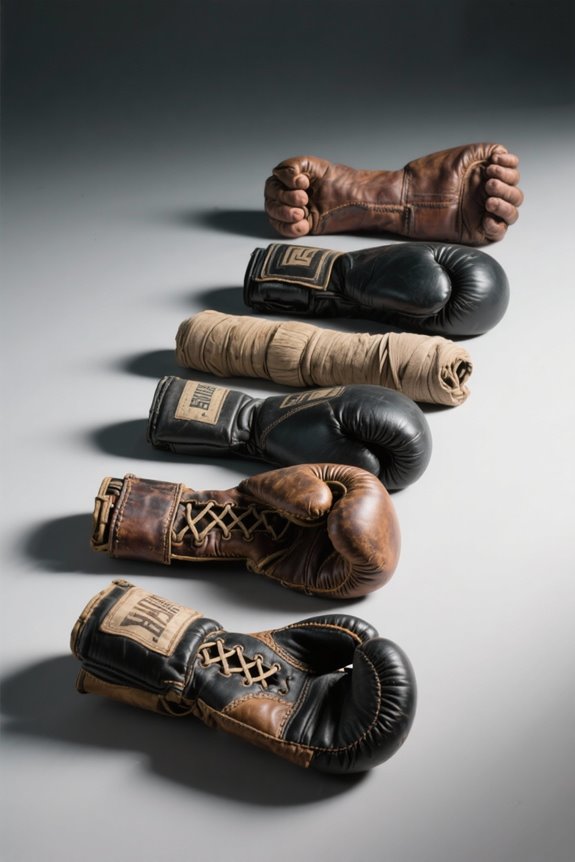
The History of Boxing Gloves: From Bare-Knuckle to Modern Safety

Boxing gloves have a rich history, evolving from the ancient “himantes” used in Greece to protect bare-knuckle fighters. By the 17th century, padded gloves emerged, refining safety protocols. The 19th century brought significant design changes, mandating gloves with the Marquess of Queensberry Rules. Today’s gloves feature advanced padding materials like gel and memory foam for better impact absorption. These innovations enhance safety while providing customizable fits. Discover how these changes have shaped boxing in ways you may not expect.
Key Takeaways
- Boxing gloves originated in ancient Greece with protective hand wraps called “himantes” around 1500 BCE, which marked the early effort to protect fighters’ hands.
- The introduction of padded gloves in the 17th century aimed to reduce injuries, evolving significantly by the 19th century with the Marquess of Queensberry Rules.
- Design enhancements transitioned from leather wraps to modern gloves featuring gel-infused padding and advanced foam for better safety and performance.
- Modern boxing gloves incorporate smart technology for tracking punch metrics and have improved wrist straps to minimize injury risks during matches.
- Regulatory bodies enforce safety standards for gloves, reflecting the sport’s evolution and its cultural significance in promoting safe boxing practices globally.
Origins of Boxing Gloves
The origins of boxing gloves can be traced back to ancient Greece, where fighters first used protective hand wraps. Known as “himantes,” these leather strips were utilized around 1500 BCE to shield hands while enhancing the impact of punches. This clever use of protective innovations allowed athletes to engage in fierce competition. As boxing became an Olympic sport in 688 BCE, the himantes remained a staple for safeguarding fighters. Artistic depictions, such as the “Boxer at Rest” statue, illustrate the wrestling techniques and hand protection of the era. These ancient techniques markedly influenced the sport, laying the groundwork for future developments. The combination of safety with performance was vital in establishing boxing’s popularity during this period. Modern boxing gloves continue this tradition of protection, incorporating features like wrist support and padding to reduce injury risk during training and competition.
The Birth of Padded Gloves

As boxing evolved, the need for better protection led to the creation of padded gloves. Initially made from horsehair and leather, these gloves offered more safety than bare-knuckle fighting. The primary purpose was to protect boxers’ hands while still allowing for powerful strikes. Padded glove innovations marked a turning point in boxing safety measures, gradually shifting the sport to a more modern and secure format. Although not initially standardized, padded gloves became essential in competitive matches with the introduction of the Marquess of Queensberry Rules. These advancements enabled boxers to concentrate on technique rather than brute force, fostering a more respectful and skillful approach to the sport. Modern boxing gloves incorporate advanced features like multi-layer foam padding and shock absorption systems to provide superior hand and knuckle protection during training and competition. Padded gloves have since become a symbol of boxing worldwide.
Regulatory Milestones in Boxing

Regulatory milestones in boxing have played a crucial role in shaping the sport into what it is today. The introduction of the London Prize Ring Rules marked a significant shift towards structured competition. Later, the Marquess of Queensberry Rules revolutionized the game by mandating gloves, which directly enhanced fighter safety. Governing bodies, such as the British Boxing Board of Control and the WBC, made further strides in establishing standardized rules and safety standards, ensuring fair play. The ten-point scoring system adopted in the mid-20th century also improved transparency and consistency in results. Each of these regulatory impacts has contributed to boxing’s evolution, promoting a culture of safety and fairness that resonates with fans and fighters alike. Modern equipment regulations have continued this tradition, requiring high-quality stitching and durable materials to prevent equipment failure and maintain fighter protection.
Evolution of Design and Materials

Boxing gloves have undergone significant changes over the years, reflecting advancements in both design and materials. The evolution began with leather hand wraps used by the ancient Greeks and Romans, evolving into padded gloves by Jack Broughton in 1743. Design innovations, such as the thumb-lock feature and separate fingers, enhance safety and performance. Material evolution has played a vital role, shifting from leather wraps to horsehair padding, and eventually to advanced foam that absorbs shock better. Modern gloves also incorporate synthetic fabrics, making them lighter and more durable. Recent advancements include gel-infused padding for superior protection. Today’s boxing gloves utilize materials like PU leather and Maya Hide to improve durability while maintaining performance standards. These developments guarantee that boxers experience both comfort and safety in the ring, fostering a deeper sense of community in the sport.
Recommended Products

INNER GLOVES FOR QUICK PROTECTION– Wish you could skip the time required for hand-wrapping? The RDX padded IS2 inner gloves are built for both convenience and protection as they are quick to slip on and feature gel infused padding that cushions your hand. The 100cm long wrist strap provides solid wrist support while the OEKO-TEX certified elasticated fabric offers a comfortable and sweat-free experience. Built for multiple sports, the RDX quick wraps simplify your prep and shield your hands
INNER GLOVES FOR QUICK PROTECTION– Wish you could skip the time required for hand-wrapping? The RDX padded IS2 inner gloves are built for both convenience and protection as they are quick to slip on and feature gel infused padding that cushions your hand. The 100cm long wrist strap provides solid wrist support while the OEKO-TEX certified elasticated fabric offers a comfortable and sweat-free experience. Built for multiple sports, the RDX quick wraps simplify your prep and shield your hands
INNER GLOVES FOR QUICK PROTECTION– Wish you could skip the time required for hand-wrapping? The RDX padded IS2 inner gloves are built for both convenience and protection as they are quick to slip on and feature gel infused padding that cushions your hand. The 100cm long wrist strap provides solid wrist support while the OEKO-TEX certified elasticated fabric offers a comfortable and sweat-free experience. Built for multiple sports, the RDX quick wraps simplify your prep and shield your hands
Advances in Modern Boxing Gloves

Recent advancements in modern boxing gloves have revolutionized the sport, enhancing both safety and performance. New padding innovations, such as gel technology and memory foam, improve impact absorption, reducing strain on knuckles and wrists. The integration of smart technology in gloves now provides real-time data, tracking punch speed and force. This supports fighters in refining their technique and enhancing training efficiency. Safety enhancements include improved wrist straps and customized fits, which greatly reduce injury risks. Furthermore, the use of sustainable materials showcases a commitment to environmental responsibility without sacrificing quality. Modern boxing gloves are now versatile, designed for various combat sports, ensuring that athletes can train effectively, whether they are sparring or cross-training. Leading manufacturers like Fairtex have developed specialized features such as triple-layered foam cores that provide superior impact absorption at the knuckles, further advancing protection for fighters during intense training sessions.
Recommended Products
INNER GLOVES FOR QUICK PROTECTION– Wish you could skip the time required for hand-wrapping? The RDX padded IS2 inner gloves are built for both convenience and protection as they are quick to slip on and feature gel infused padding that cushions your hand. The 100cm long wrist strap provides solid wrist support while the OEKO-TEX certified elasticated fabric offers a comfortable and sweat-free experience. Built for multiple sports, the RDX quick wraps simplify your prep and shield your hands

Boxing Gloves: Fight your way to the top with Ringside’s Apex Boxing Bag Gloves. These durable synthetic leather gloves will help you push your body to the limit every time and allow you to reach your fitness and athletic goals.

INNER GLOVES FOR QUICK PROTECTION– Wish you could skip the time required for hand-wrapping? The RDX padded IS2 inner gloves are built for both convenience and protection as they are quick to slip on and feature gel infused padding that cushions your hand. The 100cm long wrist strap provides solid wrist support while the OEKO-TEX certified elasticated fabric offers a comfortable and sweat-free experience. Built for multiple sports, the RDX quick wraps simplify your prep and shield your hands
The Cultural Impact of Gloves on Boxing
Throughout the history of boxing, gloves have played a significant role in transforming the sport’s identity. Initially introduced under the Marquess of Queensberry Rules, gloves shifted boxing from a brutal contest to an accepted sport, enhancing its cultural symbolism. They allowed athletes to compete while reducing visible injuries, appealing to broader social classes. Gloves, particularly in Mexico, have come to represent national pride, crafted with vibrant colors and exceptional durability. Icons like Canelo Alvarez have solidified these gloves as cultural treasures, treasured by fans. This evolution reflects boxing’s journey toward respectability and safety, echoing its growth in global recognition. Modern combat sports equipment continues this tradition, with athletes across MMA and other disciplines relying on moisture-wicking materials and reinforced construction to enhance performance while maintaining comfort during intense competition. Consequently, gloves do more than protect; they embody the heart and history of boxing, connecting individuals to its rich legacy.
Future Directions in Boxing Glove Technology
How will the future of boxing glove technology shape the sport? Innovations promise to enhance safety and performance for all fighters. Smart technology is emerging, with gloves equipped with sensors that track punch speed and technique. This data helps both athletes and coaches analyze training, leading to more effective strategies. In addition, advances in padding, like gel-infused materials and 3D-printed designs, provide better impact absorption while reducing injury risk. Eco-friendly materials are gaining traction, with sustainable options such as recycled foams and non-toxic fabrics. These developments not only focus on personal safety and sustainability but also enhance comfort and fit, creating gloves tailored to the individual’s needs while reducing environmental impact. Current innovations like triple-density foam technology demonstrate how modern materials continue to evolve, offering superior shock distribution and protection for fighters at all levels. The future of boxing glove technology looks bright!
Recommended Products
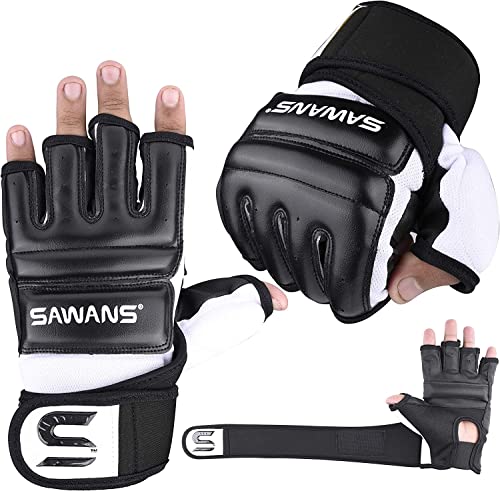
SAWANS High Quality Body Combat MMA, Martial Arts Bag Training Gloves.Made Of Synthetic Leather, Neoprene And Stretchable Spandex.

Premium Quality: Speed Bag Gloves made synthetic PU leather with abrasion proof, EVA lining pads under the knuckle prevent hands from injuries and shock-impact.

EFFECTIVE IMPACT DISPERSION – Are your training gloves affecting your accuracy? The RDX gloves dissipate the force of impact across the specially made, pre-curved anatomical structure of the sparring gloves due to the presence of Quadro Dome 3 padding, which uses EVA foam and SpongeX sheet. This results in a comfortable training experience for the users of the RDX heavy boxing gloves.
Frequently Asked Questions
How Do Professional Boxers Choose Their Gloves for Different Bouts?
Professional boxers sift through options, like artists selecting hues, prioritizing glove fit and personal preference. They tailor choices based on bout requirements, balance protection, weight, and style, crafting their identity within the ring’s embrace.
What Effect Do Glove Weights Have on a Boxer’s Performance?
Glove weight greatly influences a boxer’s performance, affecting speed, stamina, and control. Ideal weight distribution and glove size enhance protection while allowing for precision in striking, ultimately impacting overall effectiveness and confidence during competition and training.
Are There Specific Gloves for Amateur Versus Professional Boxing?
Yes, there are specific gloves for amateur versus professional boxing. Amateur gloves typically utilize stiffer materials and come in sizes like 10 oz or 12 oz, while professional gloves are lighter, prioritizing glove sizes from 6 oz to 10 oz.
How Often Do Boxers Need to Replace Their Gloves?
Boxers typically need to replace their gloves every 6-18 months based on usage. Consistent maintenance tips, such as regular cleaning and proper storage, can greatly extend glove lifespan, enhancing both safety and performance in the ring.
What Regulations Exist for Women’s Boxing Gloves?
Women’s boxing regulations stipulate specific glove specifications based on weight classes, with 8 oz gloves for fighters up to 147 lbs and 10 oz gloves for those over that weight, promoting safety and fair competition.


