As an Amazon Associate, we earn from qualifying purchases. Some links on this site are affiliate links at no extra cost to you. Our recommendations are based on thorough research and editorial judgment.


Southpaw Mitt Patterns: Adjusting Angles and Lines

Southpaw mitt patterns emphasize adjusting angles and lines for effective striking. By creating unexpected angles, southpaws can exploit openings against orthodox opponents. Utilizing footwork and lateral movement enhances these adjustments, allowing for quick escapes and counterattacks. Practice drills that focus on precision and timing help develop the lead hand, while incorporating defensive maneuvers guarantees safety during combinations. Understanding the connection between foot positioning and offensive opportunities is key. Discover additional techniques to elevate your training further.
Key Takeaways
- Focus on unique striking angles during mitt drills to enhance offensive pressure for southpaw fighters.
- Incorporate lateral movements and pivots in mitt patterns to create evasive angles and maintain balance.
- Utilize the 2-3-2 combination in mitt work to improve rhythm breaks and surprise opponents with angle adjustments.
- Emphasize accuracy and precision in lead hand strikes to exploit openings in the opponent’s defense during training.
- Practice defensive maneuvers like slips and rolls in mitt drills to develop instinctive reactions to counterattack.
Understanding the Southpaw Stance
The southpaw stance represents a unique and strategic positioning in boxing. It showcases the right foot and hand forward, allowing the dominant left hand to deliver powerful rear punches. This stance offers significant southpaw advantages, including altered punch angles that can catch orthodox opponents off guard.
While the southpaw stance creates tactical surprises, it also introduces defensive vulnerabilities. The right side remains exposed to direct attacks from orthodox fighters, who can target it with hooks and straight punches. But the lead right hand can effectively parry orthodox jabs, and ideal foot placement allows for swift evasive maneuvers. Understanding these dynamics equips fighters and enthusiasts alike to appreciate the intricacies of southpaw boxing and its impact on ring strategy. Training with quality equipment that provides solid wrist support helps southpaw fighters maintain proper form while developing their unique angles and defensive techniques.
Importance of Footwork in Southpaw Boxing

Effective footwork serves as the foundation for successful southpaw boxing, complementing the unique stance and strategies already discussed. Mastering footwork fundamentals is crucial for maintaining balance and offensive readiness. Key techniques like step-drag, pivot, shuffle, and bounce are essential. The step-drag keeps the hips stable, ensuring power and readiness to strike. Lateral movement and circling are necessary for controlling distance and angles, enhancing both defense and attack. Proper pivoting allows quick shifts between these phases without compromising balance. Additionally, positioning the front foot outside the opponent’s foot can create offensive opportunities while limiting their reach. A strong core stabilizes the body during these movements, enhancing balance and coordination while facilitating energy transfer from legs to fists. By integrating these balance techniques, a fighter can enhance their performance, maximizing both power and strategic advantage in the ring.
Creating Angles Against Orthodox Opponents
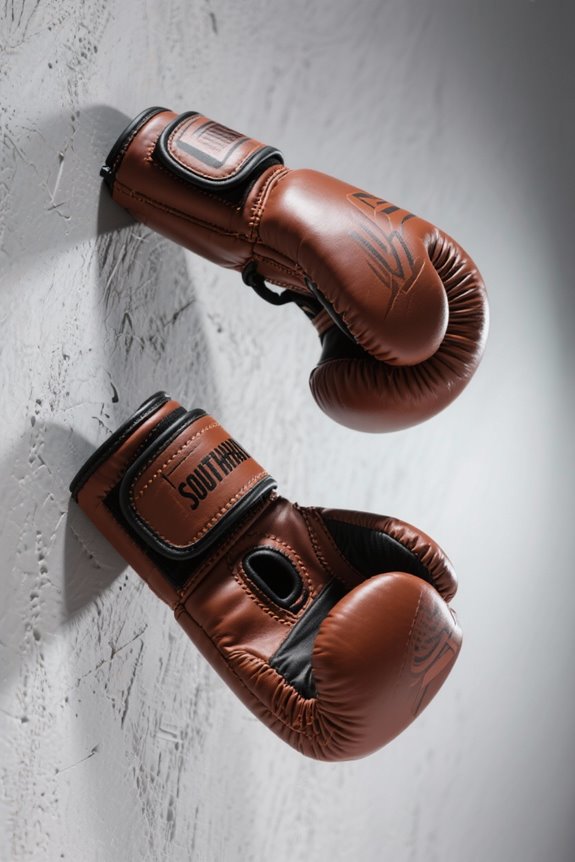
Creating angles against orthodox opponents is an essential strategy for southpaw boxers, allowing them to maximize their unique stance. Southpaws utilize angle exploitation to create tactical advantages, making it difficult for orthodox fighters to defend effectively. By maintaining lead foot dominance, southpaws improve positional awareness and generate more powerful strikes. They mix punch variations like right hooks and straight lefts to confuse opponents, forcing constant defensive adjustments. Additionally, effective timing adjustments enhance their countering techniques, revealing openings in orthodox defenses. Moreover, southpaws adopt defensive strategies that involve shifting angles to evade power shots, increasing their chances of landing clean punches. When training these techniques, using gloves with ergonomic shapes supports natural hand movements and helps boxers develop proper form while maintaining control during pad work. Overall, these techniques empower southpaws to navigate the ring more strategically, fostering an advantageous boxing landscape.
Recommended Products

MARVEL HERO ELITE TRAINING GLOVES: Each glove is crafted to reflect your favorite Marvel heroes. Choose from 8 iconic hero designs, including Black Panther, Captain America, Captain Marvel, Hulk, Iron Man, Punisher, Venom, Miles Morales & Thor.

Traditional Design: Crafted to perfection with a traditional design that boxing purists love. This precision tool positions your hands for performance, delivering visceral feedback with a satisfying pop on impact.

The Timeless Strength of 100% Real Leather: Made from full-grain aniline leather, the T360 Leather Boxing Gloves elevate the rich texture, enduring strength, and unmistakable character of classic boxing gloves with groundbreaking innovation. This is the pinnacle of craftsmanship and protection.
Effective Jab Techniques for Southpaws

In boxing, mastering the jab is essential for southpaws aiming to gain an advantage in the ring. Effective jab techniques focus on jab mechanics and jab variations that can disrupt an opponent’s rhythm. For example, a soft jab can control an opponent’s lead hand, while a well-timed jab can exploit openings in their guard. Utilizing a slight step to the left creates angles, allowing for powerful follow-up punches. Variations, like body jabs, help lower the opponent’s guard, enhancing opportunities for attacks. Additionally, raising the shoulder during jabs forms a defensive barrier. By mastering these techniques, southpaws can maintain offensive pressure, control the fight’s distance, and increase their chances of landing effective punches. To prevent hand injuries while executing these jab techniques, southpaws should implement proper wrapping techniques using hand wraps measuring between 120 to 180 inches to ensure effective coverage and support for knuckles, wrists, and thumbs.
Recommended Products

Quality Materials: these boxing wraps are crafted from serviceable and flexible conforming nylon material that increasing comfort and resilience, easy to withstand daily wear and tear, strong enough for long term service; The material is also machine washable, easy to clean and maintain

Mexican style hand wraps with 180" length of slightly elastic cotton blend material for optimal comfort and support

Made of machine-washable 100% durable cotton-weave
Utilizing Lateral Movement for Defense

Lateral movement serves as an essential defensive strategy for southpaw boxers, helping them evade attacks and maintain control in the ring. This technique allows fighters to avoid straight-line retreats and instead circle around their opponents. By pivoting off their lead foot, they can efficiently redirect angles while staying balanced and ready. Keeping a low hip position during footwork enhances defensive readiness, preparing them for quick counterattacks. Side steps at both close and long range enable swift escapes from pressure, while angled movements create openings, especially against orthodox fighters. Incorporating head slips amplifies this defense, making southpaws elusive targets. During training sessions, wearing properly fitted 16oz sparring gloves with adequate wrist support ensures fighters can practice these lateral movements safely while maintaining hand mobility and protection. Ultimately, leveraging lateral movement effectively empowers southpaws to remain formidable while minimizing exposure to opponent punches.
Power Punches: Harnessing the Left Cross
Power punches greatly enhance a southpaw’s offensive capabilities, and the left cross stands out as a signature move. Proper punch placement and body rotation are vital for maximizing its power. Maintaining weight balance, primarily on the left foot heel, guarantees stability while driving through the punch. Timing drills and speed training can refine this technique, improving accuracy focus during execution. To increase effectiveness, use punch combinations and slip defensive angles. A well-timed jab can create openings for the left cross, allowing for ideal positioning. By pivoting the lead foot outside the opponent’s, a southpaw maximizes punch angle and reduces counter risks. Such techniques not only elevate performance but also enhance safety during bouts. Developing punching power and speed can be further enhanced through resistance training with tools like Shadow Boxer Pro Resistance Bands, which allow fighters to build explosive strength without requiring a sparring partner.
Recommended Products

DEVELOP PUNCHING POWER, SPEED AND AGILITY: Want to improve boxing training with no sparring partner or boxing trainer? Add this portable fitness equipment to your boxing kit for a full body workout. Great alternative to egg weights for shadow boxing.

MUCH HEAVIER RESISTANCE & IMPROVED TEN - Resistance from 20 LBs to 40 LBs, heavier bands with max tension compared with similar resistance workout bands. The metal carabiners on the resistance strap enable the user to add or remove resistance to create the perfect challenge for every muscle group. Challenge your limit.

[Great Full Body Resistance Training]: Whether in basketball, football, gym or boxing training, you can bring your goals to new height and power. And you can do weight training, plyometrics, bodyweight exercises, ballistic exercises or other to improve your explosive power on arms, legs, chest and waist. An great choice for boxing, taekwondo, MMA, fencing, basketball, volleyball, baseball, track and field sports, etc
Combining Head and Body Shots
Combining head and body shots is essential for any southpaw looking to enhance their boxing strategy. This head-body synergy creates diverse attack angles that keep opponents guessing. By initiating with jabs or crosses to the head, southpaws can draw opponents’ guards upward, opening the body for hooks or uppercuts. Clever positioning of the rear shoulder and foot along the opponent’s centerline enhances strike speed and accuracy. Rapid shifts between target areas disrupt defensive setups, yielding counter opportunities. High-value body zones, like the solar plexus or liver, can sap energy and make head strikes more effective. Targeting the midsection with body shots can disrupt your opponent’s breathing and stamina, creating openings for head strikes. In practice, utilizing mixed combinations increases scoring chances and encourages defenders to misjudge openings, further solidifying the southpaw’s advantage in the ring.
Defense Strategies Against Jabs and Hooks
Effective defense against jabs and hooks can greatly improve a southpaw’s performance in the ring. Utilizing smart defensive maneuvers, such as parrying the jab or using a high guard, considerably reduces the risk of getting hit. Slipping inside or outside also creates opportunities for effective counter strategies, allowing for quick retaliation. When facing hooks, a high elbow block or forearm barrier can absorb impact while maintaining balance. Additionally, weaving or ducking can completely evade incoming punches. After defending successfully, countering with a straight punch or hook can catch opponents off-guard. Southpaws should prioritize shifting angles and maintaining their stance to capitalize on defensive efforts, fostering a sense of community and excellence among fellow boxers in pursuit of success. Just as compression sleeves provide targeted support for knee stability during athletic movements, proper defensive positioning offers structural support that enhances a boxer’s ability to absorb and redirect incoming force.
Implementing Footwork for Counterattacks
Footwork plays an essential role in setting up effective counterattacks for southpaw boxers. By establishing dominant outside foot positioning, fighters can create advantageous angles against orthodox opponents. This alignment opens up counterpunching opportunities while allowing for safer pivots to evade attacks.
The step-drag technique promotes smooth lateral movement, ensuring balance during counter footwork. Quick pivots and lateral adjustments can disrupt an opponent’s rhythm, leading to openings. Explosive movements, like the split entry counter, enable a powerful response while slipping punches.
Maintaining a proper stance with knees bent prepares the boxer for swift counters. Incorporating footwork drills into training sessions three to five times a week builds the endurance and agility needed for effective counterattacking. Ultimately, mastering foot positioning and balance enhances every counterattack, fostering confidence and effectiveness in the ring. Embrace these skills to elevate your southpaw strategies.
Recommended Products


【 The Complete Boxing Training Set 】: You will get a pair of punching mitts, a taekwondo kick pad, a pair of boxing bandages. This set meets all your daily training needs, both kids youth or adults

𝐃𝐔𝐑𝐀𝐁𝐋𝐄 𝐁𝐔𝐈𝐋𝐓 𝐅𝐎𝐑 𝐈𝐍𝐓𝐄𝐍𝐒𝐄 𝐁𝐎𝐗𝐈𝐍𝐆 𝐏𝐀𝐃𝐒 𝐓𝐑𝐀𝐈𝐍𝐈𝐍𝐆 Engineered for long-term use, these boxing pads and boxing mits are built to handle daily striking sessions in both home and gym environments. Ideal for structured boxing pads training, they deliver reliable performance for coaches and athletes who rely on consistent durability during high-repetition workouts and pad drills.
Essential Mitt Drills for Southpaws
Essential mitt drills for southpaws can greatly enhance a boxer’s skills and confidence in the ring. These mitt drill fundamentals focus on accuracy training, vital for developing a southpaw’s unique striking angles. The jab call-out drill targets single and double jabs, honing speed and precision with the lead hand. Target practice mitt drills improve instinctive timing and adaptability, training boxers to respond to randomly raised mitts. Incorporating movement and defensive maneuvers, like slips and rolls, prepares southpaws for dynamic responses during fights. By integrating these drills, boxers can build fast reflexes, maintain balance, and make quick decisions. When selecting training equipment, choosing gloves with superior wrist support helps prevent injuries during intensive mitt work sessions. Ultimately, these exercises empower southpaws, ensuring they not only hit their targets but also embrace their natural fighting style with confidence.
Recommended Products

The Most Advanced Gloves Ever Made: T360 Boxing Gloves are the culmination of over a decade of research, fighter feedback, and extensive testing, resulting in our most comfortable, protective, and performance-driven glove to date.

Thickest 1.3 mm AA premium drum-dyed 100% genuine cowhide leather

Ultra-light and compact for increased speed, power and precision
The 2-3-2 Combination: A Southpaw Favorite
The 2-3-2 combination stands out as a signature technique for southpaw fighters, known for its effective blend of offense and defense. This sequence consists of a sharp left cross (2), a right lead hook (3), and concludes with another left cross (2). The fluidity of the 2-3-2 allows for smooth rhythm breaks that can catch opponents off-guard. Proper footwork and pivoting create angles that maximize offensive opportunities while maintaining defensive readiness. The initial left cross can double as a probing jab, leading to advantageous positions for follow-up strikes. By emphasizing finishing techniques and balance, this combination not only enhances attacking effectiveness but also reinforces a sense of belonging among southpaw practitioners mastering their craft.
Rotation and Power Generation in Punching
In the world of boxing, understanding rotation and power generation in punching is essential, especially for southpaw fighters. Power primarily arises from rotational force created through hip rotation and torso movement, rather than mere arm strength. Maintaining weight on the rear foot before rotation aids balance and maximizes torque mechanics during punches like the left cross. As the hips rotate clockwise, energy undergoes efficient transfer, aligning shoulders and enhancing punch technique. Sequential rotation of the hips, torso, and shoulders produces a powerful kinetic chain effect. It is crucial to keep knees stable to prevent energy loss. With effective mechanics in place, southpaws can release devastating punches while ensuring structural integrity, making each strike more potent and precise.
Setting up Openings With Feints
Feints play an essential role in creating openings for southpaw fighters. They utilize various feint strategies to mislead opponents. A jab feint establishes distance, while a head feint opens up opportunities for hooks. Deceptive timing is key, as body feints distract rivals, and slip feints offer angles for counterattacks. By combining quick steps and lateral movement, southpaws can confuse opponents, setting up powerful punches. The lead foot feint shifts weight, priming fighters for quick jabs. Employing these techniques amplifies the chances of landing significant strikes. Ultimately, mastering feints not only enhances offensive potential but also fosters a sense of belonging in the ring, inviting fighters to connect and engage with their adversaries on a deeper level.
Enhancing Reaction Time Through Drills
While enhancing reaction time may seem challenging, incorporating specific drills can make the process effective and engaging. One valuable method involves reaction ball drills, where athletes strike a ball that moves unpredictably, improving hand-eye coordination and agility. Agility ladder workouts also play an essential role, encouraging quick footwork and dynamic movement patterns. These drills not only build speed but also develop timing and spatial awareness necessary for the ring. Tennis ball exercises, paired with double-end bag training, further sharpen reflexes by requiring quick adjustments to shifting targets. Integrating these drills into a regular training regimen promotes instincts and defensive skills, fostering a strong sense of community among fighters working for continuous improvement and excellence together.
Frequently Asked Questions
How Can Southpaws Adapt Mitt Patterns for Different Opponents?
Southpaws can adapt mitt patterns through opponent analysis, identifying strengths and weaknesses. By employing strategy adaptation, they can shift their combinations and angles, ensuring effective counterattacks while maintaining an unpredictable and dynamic fighting style.
What Common Mistakes Do Southpaws Make During Mitt Drills?
Common mistakes southpaws make during mitt drills include neglecting foot positioning and failing to adapt to unorthodox angles, leading to ineffective punches and poor defensive readiness, ultimately hindering their potential in the ring.
How Can I Improve Hand Speed for Jab Techniques?
Improving hand speed for jab techniques can be achieved through consistent shadow boxing and technique drills. Focus on maintaining loose muscles, executing rapid combinations, and practicing angled punches to enhance agility and efficiency.
What Equipment Is Best for Practicing Southpaw Mitt Patterns?
In the vibrant arena of southpaw training, the best equipment choices include focus mitts, boxing gloves, and hand wraps, essential for effective mitt drills, facilitating skill enhancement while fostering a sense of belonging within the boxing community.
How Do I Measure Progress in My Mitt Training?
To measure progress in mitt training, establish a baseline through frequency tracking, evaluate technique improvement, utilize feedback mechanisms, and implement technology for progress tracking, ensuring consistent analysis and adjustment to enhance overall performance and skill development.


